What to Look for in a Poling Skiff
Ten things we actually check when we review a poling skiff — the ones that matter after the first ten minutes on water, not just the spec sheet.
A poling skiff is a tool. A very specific, very expensive tool. When we put one through a SkiffReview evaluation, we care less about the glossy details and more about whether the boat makes a full fishing day easier — not just the best ten minutes of it.
1. Draft that survives a real payload
Paper drafts are measured at implausibly low weights. Load the skiff the way you'd actually fish it and note the number. A 10-inch draft that becomes 14 with a cooler and batteries is a different boat than it pretends to be.
2. Hull-slap profile at rest
Sit quietly in the boat with the wind chop slapping the chines. If it sounds like a washing machine, the fish know you're there before you see them.
3. Platform stability — all four corners
Not just dead-centre on the platform. Lean out, shift weight to a corner, plant your feet the way you actually would when a fish is moving. Boats that pass the showroom test but flinch under real motion will cost you fish.
4. A clean, honest layout
Casting decks should be open and uncluttered. The rigging should route cleanly — no exposed wiring where a fly line can grab it. Fuel and battery access should not require a yoga routine.
5. Finish and fit
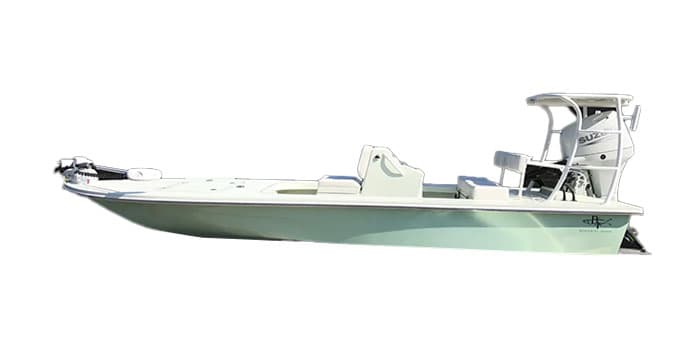
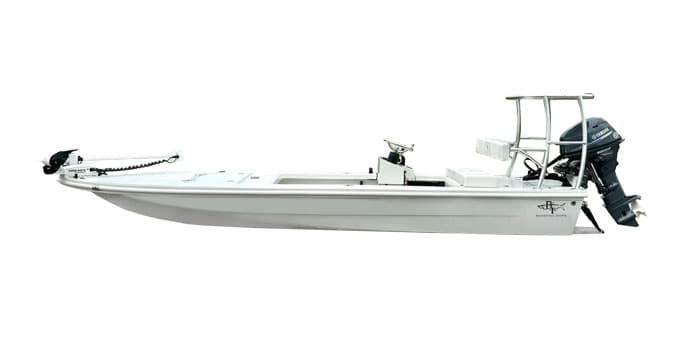
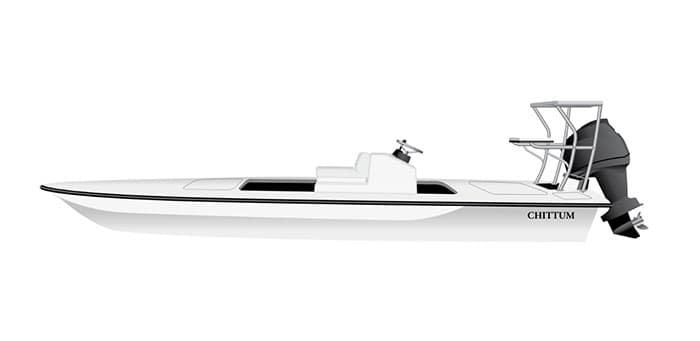
Look under every hatch. Inspect where the liner meets the hull. Skiffs in the Chittum Islamorada 18 and Hell's Bay Professional class set a benchmark here; anything visibly rougher is a flag worth asking about.
The best poling skiffs feel obvious. You shouldn't have to talk yourself into one.
6. Ride to the fish
Technical skiffs like the Maverick 17 HPX-V are expected to cross chop without hammering. Test in the roughest water you reasonably will, not the glass.
7. Rigging you can actually service
Power poles, pumps, pump-out fittings — these fail. Can you reach them without removing three decks?
8. Noise under power
Some skiffs go from quiet to whine when the jackplate lifts. You will hear it every time you run in skinny water.
9. Realistic trailer and tow profile
You still have to get the boat to the ramp. The lightest, quietest skiff on the water is still a long day if the trailer fights your truck every mile.
10. Resale track record
Poling skiffs at this tier hold value impressively well if the brand and build quality stay consistent. Look at three-year used prices, not dealer hype.